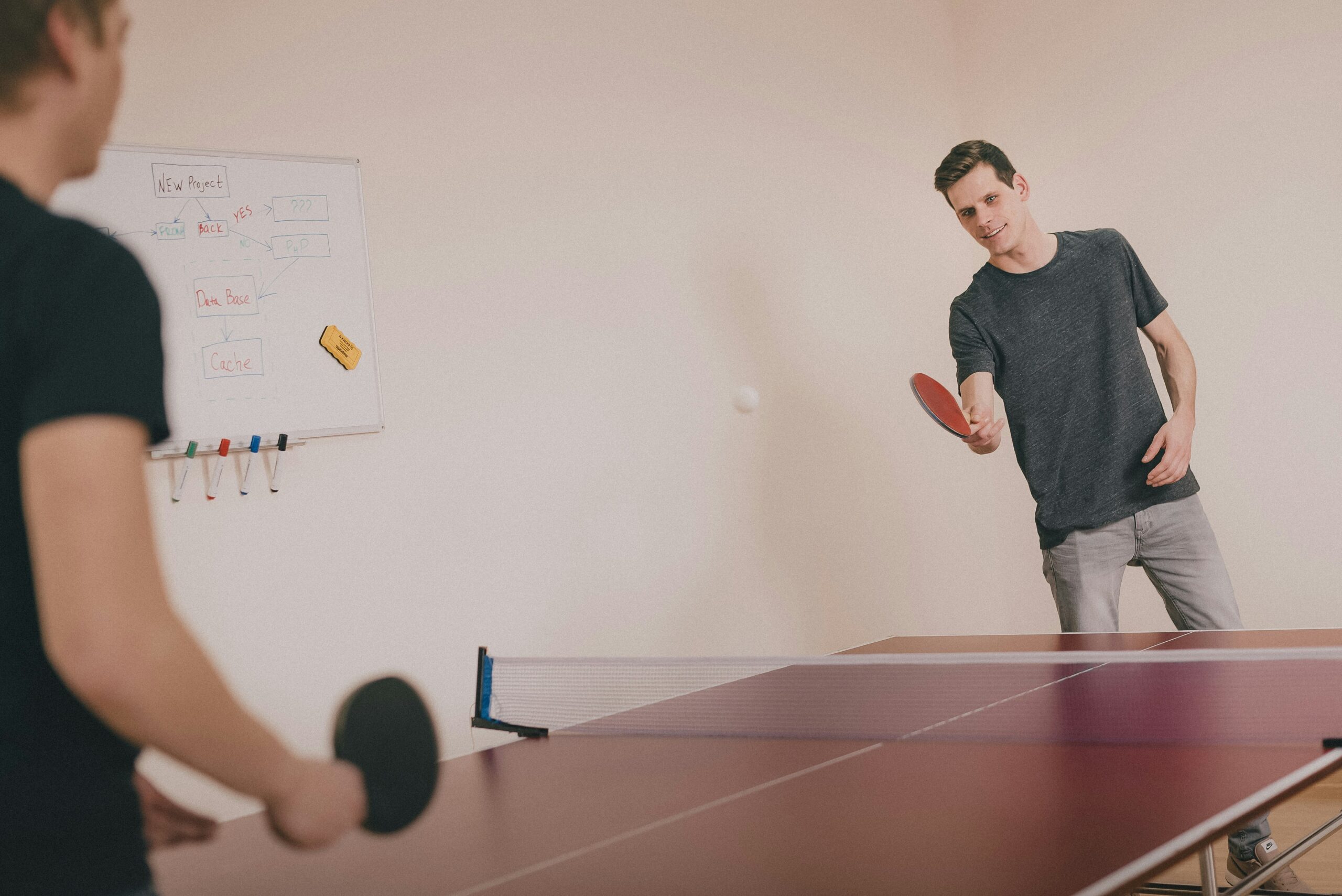
The serve sets the tone for every rally in ping pong, and it often decides who takes control early. Players use the serve to create pressure, shape the pace, and force weak returns. Moreover, a strong serve gives you a tactical advantage before the opponent even reacts. As a result, improving your serve can instantly raise your overall performance.
In competitive play, the serve works as both an offensive tool and a setup strategy. You can use spin, speed, and placement to disrupt your opponent’s rhythm. Consequently, even small improvements in technique can lead to big gains in match results. At the same time, beginners often underestimate how much science goes into a good serve.
The Physics of Spin and Ball Control
Spin plays a major role in ping pong serves, and it directly affects how the ball behaves after contact. When you brush the ball with your paddle, you create rotation that changes its bounce and flight path. Moreover, topspin, backspin, and sidespin each produce different effects on the table. As a result, mastering spin control becomes essential for advanced serving.
Backspin slows the ball and makes it drop faster, while topspin increases bounce and speed after landing. Meanwhile, sidespin curves the ball left or right, which confuses opponents during return shots. Consequently, players must learn to combine spins to create unpredictable serves. At the same time, understanding these physics principles helps you control rallies more effectively.
Grip and Stance for a Stable Serve
Your grip determines how much control you have over the paddle during the serve. Most players use either the shakehand or penhold grip, and each style affects spin potential. Moreover, a relaxed grip allows faster wrist movement, which improves spin generation. As a result, tension in your hand can reduce the quality of your serve.
Your stance also plays a key role in balance and accuracy. You should position your feet firmly and align your body toward the table. Consequently, you can transfer energy smoothly from your legs to your arms. At the same time, a stable stance helps you maintain consistency across multiple serves.
Timing and Contact Point Precision
Timing affects how cleanly you strike the ball during a serve. When you hit the ball at the right moment, you generate better spin and control. Moreover, early or late contact can weaken your serve accuracy. As a result, consistent timing becomes essential for reliable performance.
The contact point also determines how the ball travels over the net. Hitting the ball at its lowest controlled point gives you better precision and spin control. Consequently, advanced players focus heavily on repeatable contact positions. At the same time, small adjustments in timing can completely change serve outcomes.
The Role of Wrist Action in Serve Generation
Wrist movement generates much of the spin in a ping-pong serve. When you snap your wrist at the moment of contact, you increase ball rotation significantly. Moreover, controlled wrist action helps disguise the type of spin you are using. As a result, opponents struggle to predict the ball’s movement.
However, overusing the wrist can reduce control and consistency. You should balance wrist power with arm movement for smoother execution. Consequently, players often train slow, controlled motions before increasing speed. At the same time, proper wrist mechanics reduce strain and improve long-term performance.
Placement Strategy and Table Awareness
Placement plays a critical role in making your serve effective. You can target different zones on the table to force weak returns from your opponent. Moreover, short serves limit aggressive attacks, while long serves create speed pressure. As a result, smart placement often matters as much as spin.
You should also observe your opponent’s position before serving. When you notice patterns in their stance, you can adjust your serve direction. Consequently, this increases your chances of winning the rally early. At the same time, mixing placements keeps your opponent guessing throughout the match.
Common Mistakes That Affect Serve Quality
Many players make the mistake of rushing their serve without a proper setup. This often leads to inconsistent spin and poor ball control. Moreover, poor focus on technique reduces accuracy over time. As a result, even skilled players lose points from simple errors.
Another common mistake involves predictable serving patterns. When opponents can read your serve easily, they gain a major advantage. Consequently, variation becomes essential for competitive play. At the same time, players should avoid overcomplicating serves, which reduces reliability.
Training Methods to Improve Your Serve
Consistent practice builds muscle memory, which strengthens serve performance. When you repeat controlled motions, your body learns stable movement patterns. Moreover, focused drills help refine spin, timing, and placement. As a result, structured training leads to faster improvement.
You should also practice serves under match-like conditions. This helps simulate pressure and improves decision-making during real games. Consequently, your confidence grows as your consistency increases. At the same time, reviewing your serves helps identify small technical flaws that need correction.
Building a Winning Serve Strategy
A strong serve strategy combines variation, control, and unpredictability. When you mix spin types and placement zones, you keep your opponent off balance. Moreover, strategic serving helps you dictate the pace of the match. As a result, you gain control from the very first shot.
At the same time, you should adapt your serve strategy based on your opponent’s weaknesses. Some players struggle with backspin, while others misread sidespin. Consequently, observing and adjusting become key parts of competitive success. In addition, a flexible approach ensures your serves remain effective in different match situations.